Monday, June 24, 2013

How the Ban on Ozone-Depleting Refrigerants Effects You

What You Need To Know About New R-22 Freon Laws

This year, 2013, is the first year that there will not be enough R-22 refrigerant produced to meet residential demand. You and I both know that when supply tightens up prices rise. Freon is already expensive. So plan on prices rising this summer and over the coming years.
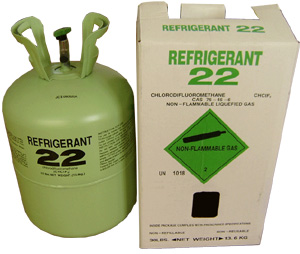
 
Ozone-depleting R-22 Refrigerant
 
But terms like R-22 are a little technical, let me explain; R-22 has been the refrigerant of choice for residential heat pump and air-conditioning systems for more than four decades. Unfortunately for the environment, R-22 contributes to ozone depletion. In addition, R-22 is a greenhouse gas that contributes significantly to global warming.


What is being done to keep us cool? 
 
As R-22 is phased out over the coming years manufacturers of residential air conditioning systems are offering equipment that uses ozone-friendly refrigerants. Many homeowners may be misinformed about how much longer R-22 will be available to service their central A/C systems and heat pumps. Homeowners need information about the transition when deciding whether to purchase a new A/C system or heat pump, or when having an existing system repaired.

Existing units using R-22 can continue to be serviced with R-22. There is no EPA requirement for homeowners to change or convert R-22 units for use with a non-ozone-depleting substitute refrigerant.

New refrigerants have been developed and many companies are using them to replace R-22 in existing systems. Such changes, called "retrofits," are allowed if the alternative has been found acceptable for that type of use.


WARNING: Use a reputable Air Conditioning contractor


One important thing a homeowner can do for the environment, regardless of the refrigerant used, is to select a reputable dealer that employs service technicians who are EPA-certified to handle refrigerants. Technicians often call this certification "Section 608 certification," referring to the part of the Clean Air Act that requires minimizing releases of ozone-depleting chemicals from HVAC equipment.

A Reputable Air Conditioning Contractor will take the time to learn and train their service technicians how to properly retrofit an air conditioning system with ozone friendly refrigerant.

There are steps that need to be taken and a specific way these retrofits need to be handled so extra training is required to be able to properly provide new safer refrigerant.
If your home or business is located in the DFW area Supreme Air Service technicians are all trained in the replacement of R-22 and they can be reached by calling (214) 310-1680.
 
Have a great day!
 

Thursday, June 13, 2013

Learn Why Dirty A/C Coils Are a Real Problem

When your cooling system has dirty A/C coils, you’re paying more to cool your home and getting less cooling than you’re paying for.

An air conditioner doesn’t add coolness to the inside of your house; it removes heat. What’s left behind when you take out the heat energy is a cool, comfortable home.

The components that make heat transfer happen are the evaporator and condenser coils. Since these coils are continuously exposed to both indoor and outdoor fan-driven airflow, they easily accumulate layers of dirt and dust that degrade optimal heat transfer.


Indoor evaporator coil


In addition, passages inside the indoor evaporator coil are constantly damp with condensation. Airborne mold spores can find a perfect breeding ground in those wet coil passages. Mold growth inside an evaporator coil can eventually obstruct airflow through the coil.


Outdoor condenser coil

 
While the outdoor condenser coil can be washed down with a garden hose to remove external dust accumulation, do-it-yourself methods seldom reach the interior coil passages where dust and dirt inhibit heat transfer.


The indoor evaporator coil is even more problematic. Installed inside the air handler, the coil is often a sealed component that’s not user accessible. The expertise of an HVAC technician is required to access the evaporator coil for inspection and cleaning.
 
 
Here are some of the methods a professional will use to clean dirty A/C coils:
  • Low pressure air blown through the coil and use of a soft brush can remove minor accumulations. More stubborn deposits require application of special solvents designed for coil cleaning.
  • Small low-pressure steam cleaners are also utilized in some cases.
  • Pump sprayers can be used to infuse foaming coil cleaner into the interior of the coil. The coil is then flushed clean with fresh water.
  • Pressure washers combined with a pre-application of coil cleaning solvents are increasingly the choice of professionals. These are followed by pressure rinsing with clean water.
 
Supreme Air Services has been the DFW's premier source of HVAC sales and service since 1975. Ask us about professional services to clean your dirty A/C coils just in time for another long cooling season.
 
Call today for an appointment 214-310-1680.
 
Have a great day!

Tuesday, May 21, 2013

Repair or Replace your Air Conditioning System?

Repair or Replace? This is always a difficult decision. On one hand you don't want to spend money on a new system, but on the other hand, you don't want to throw good money after bad. Which way should you go? It really boils down to the condition and age of the air conditioning system.


If you have been keeping your equipment properly maintained by a licensed air conditioning technician, then perhaps the current repair is isolated to a single, simple problem and not indicative of a major or potentially recurring issue. In this case it might make sense to repair and fix the problem. However, with any equipment it is important to consider its efficiency and the impact that wear and tear has on that efficiency and on your monthly electric bill.


Importance of Efficiency

The Seasonal Energy Efficiency Ratio (SEER) rates the efficiency of an air conditioning unit. A unit somewhere around 10 years old would probably have been an 8 SEER unit at time of purchase. Over time this unit will wear down and operate somewhere around the 5-6 SEER level. The higher the SEER rating, the higher the efficiency of the unit. In 2006 the minimum SEER rating for an Air Conditioning unit was raised to 13 SEER. Upgrading to a newer Air Conditioning unit is surprisingly affordable based on the efficiency level of modern equipment. The money saved on your electric bill from upgrading will pay for the unit itself. So transitioning from an 8 SEER unit to a new 18 SEER unit will allow better performance at your current budget.

Should I Finance?

Monthly finance charges never sound like a good thing. What if there was a way to stick with your current budget and have a brand new A/C Unit? Well using a higher SEER unit this is a very real possibility. The amount of savings generated from your lower monthly electric bill could very well take care of any finance charge. Imagine - a cooler house, with a better unit, at your current budget.

It all adds up

When your A/C unit starts giving you trouble, the A/C Technician is usually your first call. But when you begin calling them day after day the bills add up and you are left with the same outdated inefficient unit. A new unit produces cooler air, with less energy. Less energy means a lower utility bill. Which means you could be paying for a new unit, rather than life support for your old one.

Doing your part in Going Green

Using a higher SEER unit saves energy. Saving energy saves the environment. Using technologies such as the eco friendly R410A refrigerant will also minimize the overall environmental impact. Therefore, you can feel good about saving both the planet and money on your energy bill with your new air conditioner.

Have your system checked today to make sure its running properly. Supreme Air Services is here to help you make the right choice.  Give us a call today! (214) 310-1680 or (214) 919-9960

Be sure to follow us: https://www.facebook.com/SupremeAirServices?ref=hl

Have a nice day!


Thursday, April 4, 2013

IMPORTANCE OF HVAC MAINTENANCE

Homeowners may find that preventative maintenance of their home central heating and air conditioning systems initially a waste of money; on the other hand of the picture it's a direct fortune which you invest on your valuable HVAC systems such as Central Air Conditioners, High Efficiency Furnaces and Heaters. We all maintain our vehicles to avoid such scenarios like breaking down in the middle of road, in middle of the night or no to be late for work due to mechanical failures. Same thing goes with your home heating and cooling systems. Preventative or regular maintenance keeps them running at its peak efficiency and avoid future costly parts or whole HVAC system replacement.
 
 
A Conventional preventative HVAC maintenance can help to identify the problems like rust, corrosion, frayed wires, leaks and corrosion of electrical contacts. It is important to do preventive maintenance on your air conditioning unit at a minimum of once a year to ensure your unit is operating at full capacity. Certain components within a system of heating and air conditioning require immediate attention to the jagged operation. For example; in central air conditioners the condenser coils can become clogged with dust, dirt, pollen and other particles. Due to the obstruction, the condenser coil loses its ability to remove heat from your system. In return, causes the compressor to consume more energy and increases the utility bills and lowers the efficiency of the AC unit. Due to lack of maintenance knowledge about HVAC coils and things such as dirty filters can lead to hasty failure of the compressor in central heating and air conditioning systems, the condenser fan and other system components.
In other words, a malfunction of a component within your HVAC system can overwork the unit, for example if your high efficiency furnace and central air conditioner is suppose to last for fifteen years it will break down in half of its offered lifecycle and you may need to replace them.
Choosing a preventative maintenance plan that best suits you and your system is the best option to avoid replacing the entire heating and air conditioning system. Call Supreme Air Services to schedule an appointment to have your HVAC system maintenancecheckup (214) 310-1680.